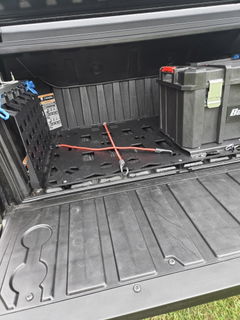
Upgrade your entire storage system while saving on the best hardware in the industry. The BOCO Custom Heavy Duty Packout Mount Set includes both our Full-Width and Half-Width plates, providing a complete solution for your shop wall, service van, or off-road rig. Laser-cut from 10-gauge American steel (over 1/8" thick), these mounts are engineered to handle 300+ lbs of gear without the flexing or cracking common with plastic alternatives.
| SPECIFICATION |
DETAILS |
| Bundle Includes |
(1) Dual Full-Width Mount + (1) Single Half-Width Mount |
| Material |
10-Gauge Mild Steel (Heavy Duty) |
| Dimensions (Full) |
18.875" x 16.875" x 0.5" |
| Dimensions (Half) |
16.875" x 8.875" x 0.5" |
| Comparable To |
Milwaukee 48-22-8485 & 48-22-8496 |
| Origin |
Designed & Manufactured in Apple Valley, CA |
Why Choose the BOCO Steel Bundle?
-
Unmatched Load Capacity: Tested to support over 300 lbs, making these the go-to choice for heavy power tool organizers and rolling drawer units.
-
Universal Mounting: Features standard 16" on-center hole spacing to ensure you hit wall studs every time, providing a much more secure foundation than plastic mounts.
-
Low-Profile Advantage: At only 0.5" thick, these plates maximize your vertical storage, allowing more room for toolboxes in tight van aisles or under shop cabinets.
-
Weld or Bolt Ready: Ships in raw steel for custom fabrication projects, or select our professional textured powder coat for a clean, rust-resistant finish.
SAVE WITH THIS SET: This bundle is the most cost-effective way to outfit a new tool trailer or garage wall with professional-grade steel mounting points. Toolbox & Mounting Hardware not included.
Built for Secure Packout Storage
The Milwaukee Packout Steel Mount Bundle is designed to help you store and organize your Packout system with confidence. This 2-pack includes both a full and half set, giving you a flexible mounting solution for different storage needs. Built from durable steel, the mounts provide dependable support for your gear while helping keep your workspace neat and easy to use. Whether you are setting up a garage, workshop, trailer, or jobsite storage area, this bundle makes it easier to keep Packout boxes accessible, secure, and ready when you need them.
Flexible Full and Half Set Design
One of the biggest advantages of the Milwaukee Packout Steel Mount Bundle is the included full and half set combination. This gives users more control over how they arrange their storage system. The full set works well for larger or more frequently used Packout items, while the half set is ideal for smaller setups or tighter spaces. This flexibility makes the bundle practical for both professional tradespeople and home users who want a clean, efficient layout. It helps maximize wall space while creating a storage setup that fits your exact needs and workflow.
Durable Steel Construction for Everyday Use
Made with strong steel construction, this mount bundle is built to handle daily use in demanding environments. It offers a sturdy base for your Packout gear and helps reduce clutter on floors, benches, and shelves. The solid build adds confidence when mounting and removing storage units, making it a reliable choice for long-term organization. Its rugged design matches the tough nature of Milwaukee Packout systems, so you can count on consistent performance over time. For users who need a dependable storage solution, this bundle delivers strength, stability, and lasting value.
Ideal for Workspaces, Garages, and Job Sites
The Milwaukee Packout Steel Mount Bundle fits well in a wide range of settings, from professional job sites to personal garages. It helps turn unused wall space into efficient storage, making tools and accessories easier to access and manage. By keeping Packout items mounted and organized, it can improve workflow and save time during busy days. The clean layout also helps protect your equipment from unnecessary damage caused by stacking or leaving items on the floor. For anyone looking to improve organization without adding complexity, this bundle is a smart and practical choice.
10-Gauge Steel (0.1345" | Thickness of Two Stacked Dimes)
- Best For: Heavy-duty commercial wall mounts, shop workbenches, and massive modular tool stacks.
- The Advantage: Extreme structural stiffness. This ultra-thick steel completely eliminates flexing, twisting, and tool rattling, making it the definitive choice for demanding daily job-site use.
12-Gauge Steel (0.1046" | Thickness of a Standard House Key)
- Best For: Mobile service vans, enclosed trailers, and standard shop organization layouts.
- The Advantage: The ultimate sweet spot between bulletproof strength and smart weight distribution. It handles constant over-the-road vibrations flawlessly without adding unnecessary bulk to your mobile rig.
14-Gauge Steel (0.0747" | Thickness of a Nickel)
- Best For: Handheld battery organizers, small tool holsters, and lightweight shelf accessories.
- The Advantage: High-tensile rigidity in a streamlined profile. It provides a rock-solid, permanent mount for smaller gear while keeping your workspace layout clean and low-profile.
8-Gauge Aluminum (0.1285" | Heavy-Duty Marine Grade)
- Best For: Open truck beds, roof racks, exterior trailer sides, and high-moisture environments.
- The Advantage: Maximum corrosion resistance with severe weight savings. Shaved pounds keep your mobile fuel efficiency optimized while remaining completely immune to rain, snow, and road salt oxidation.
10-Gauge Stainless Steel (0.1345" | Thickness of Two Stacked Dimes)
- Best For: Premium exposed truck bed brackets, marine applications, high-end shop builds, and ultimate weather protection.
- The Advantage: Combines the absolute, unyielding structural rigidity of our thickest 10-gauge plate with total lifetime corrosion resistance. It requires no paint or powder coat to stay 100% immune to rust, road salt, and harsh outdoor elements.
Note: Sheet metal gauge numbers run inversely—the lower the gauge number, the thicker and more rigid the actual metal substrate is.
What is Proposition 65?
Proposition 65 (officially known as the Safe Drinking Water and Toxic Enforcement Act of 1986) is a California law that requires businesses to provide a warning to California consumers if their products contain chemicals known to the State of California to cause cancer, birth defects, or other reproductive harm.
These warnings are required even if the chemical is present in incredibly low amounts that may not pose any significant risk to your health.
California Proposition 65 Warning
⚠️ WARNING: Products sold on this website can expose you to chemicals including lead, nickel, chromium, or other phthalates, which are known to the State of California to cause cancer and birth defects or other reproductive harm. For more information, go to www.P65Warnings.ca.gov.
Why is this warning on my order?
Because BOCO Custom LLC ships products nationwide, we include this warning to ensure full compliance with California law. A Proposition 65 warning does not mean a product is unsafe or defective; it simply means the product contains a trace amount of a regulated substance. We prioritize the safety of our customers and provide this information so you can make informed purchasing decisions.