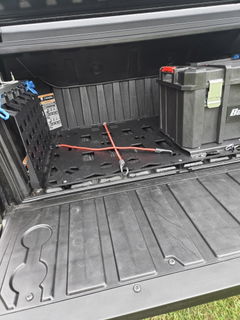
Weld-On Milwaukee Packout Full-Width Mount – Raw Steel, 10 or 14 Gauge
Original price
$40.00
-
Original price
$40.00
Original price
$40.00
$40.00
-
$40.00
Current price
$40.00
| /
No reviews
Manufactured with Pride in the USA
Volume Pricing Available
Buying for a fleet or shop? We offer discounted shipping for bulk quantities. Send us a message for a personalized estimate.
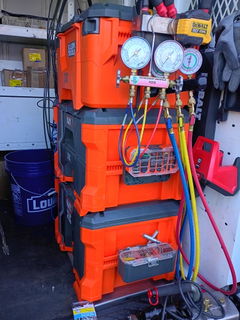
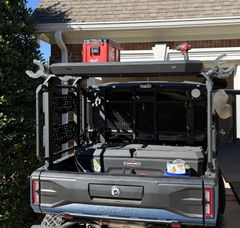
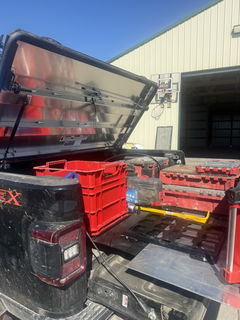
A raw steel weld-on base for Milwaukee® PACKOUT™ full-width (dual-width) boxes. Laser-cut in Apple Valley, California, deburred and ready for MIG or TIG welding with no grinding of zinc or factory paint. It is made for permanent installs on roll cages, chase truck beds, trailers and custom tool carts.
Fits
Milwaukee PACKOUT full-width (dual-width) boxes and organizers. Comparable to the Milwaukee 48-22-8485 footprint.
Material
10-gauge steel (about 0.135") or 14-gauge steel (about 0.075")
Size
18.5" × 14"
Finish
Uncoated steel, deburred and weld-ready
Install
Weld-on only. Flat plate with no mounting holes.
Shipping
In stock: 1–2 business days. Made to order: 1–2 weeks.
Origin
Made in USA (Apple Valley, CA)
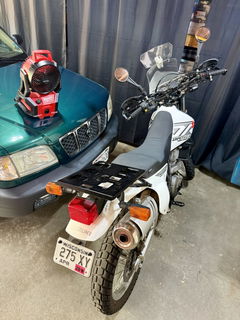
Where it mounts: welded to roll cages, truck bed surfaces, trailer frames, tool carts and utility brackets.
Fabrication notes
Position the raw plate on your cart frame, truck bed surface or bracket structure.
Tack weld the perimeter edges and verify alignment with a full-width box.
Finish your welds, let the steel cool completely, then snap your tool boxes into position.
Need a different size or pattern? We make custom mounts. Contact us with your requirements.
Why a weld-on mount
No fastener flex: welding directly to a metal chassis removes fasteners from the equation and gives you the highest vibration resistance.
Notched corners: corner reliefs are made for full-width modular organizers, for a tight seat.
Pick your thickness: 10-gauge for extreme impact environments or 14-gauge for lighter, streamlined setups.
Frequently Asked Questions
Can I bolt this to a floor or wall? No. It is a flat weld-on base with no mounting holes. For bolt-on installs, choose one of our bolt-on full-width plates.
Will the raw steel rust? Yes. Uncoated steel oxidizes over time if left untreated, so we recommend painting, clear-coating or powder-coating it after welding.
What is included? The raw steel plate only. Toolboxes and welding accessories are not included.
Is this a physical product or a digital download? This listing is the finished physical steel plate. If you would rather cut your own, see the Weld-On Full-Width DXF or browse all DXF cut files.
How long until it ships? In-stock items ship within 1–2 business days. Made-to-order items ship in 1–2 weeks.
Made in the USA — BOCO Custom LLC. Milwaukee® and PACKOUT™ are trademarks of their respective owners. BOCO Custom LLC is not affiliated with or endorsed by them; brand names are used only to describe compatibility.
10-Gauge Mild Steel (0.1345" | A Little Over 1/8 Inch)
Best For: Our Heavy-Duty plates: vehicle floors, truck beds, shop workbenches, and heavy modular tool stacks.
The Advantage: Our stiffest steel. The extra thickness resists flexing, twisting, and rattling under heavy loads and daily job-site use, and it carries the highest load ratings we publish.
12-Gauge Mild Steel (0.1046" | About Two Stacked Dimes)
Best For: Locking mounts for Husky Build-Out, Bauer, and DEWALT DXL, plus service vans, enclosed trailers, and standard shop layouts.
The Advantage: A strong middle ground between strength and weight. It handles constant road vibration without adding unnecessary bulk to a mobile rig.
14-Gauge Mild Steel (0.0747" | About the Thickness of a Nickel)
Best For: Light-Duty Packout plates, battery organizers, accessory mounts, and lightweight shelf accessories.
The Advantage: A rigid, low-profile mount for lighter gear that keeps your layout clean and your weight down.
1/8-Inch Aluminum (0.125" | Light and Rust Resistant)
Best For: Open truck beds, roof racks, exterior trailer sides, and wet or salty environments.
The Advantage: Naturally rust resistant and about one third the weight of steel. It saves weight on a mobile rig and stands up to rain, snow, and road salt.
11-Gauge 304 Stainless Steel (About 0.125" | About 1/8 Inch)
Best For: Exposed truck bed brackets, marine use, premium shop builds, and wet or corrosive environments.
The Advantage: Strong, rigid 304 stainless that resists rust without paint or powder coat, even in road salt and harsh outdoor conditions. Available on select plates, made to order.
Note: Sheet metal gauge numbers run inversely. The lower the gauge number, the thicker and more rigid the metal.
We fabricate our mounting solutions and accessories from mild steel, aluminum, and 304 stainless steel, built for harsh job-site environments. Choose the right finish for your build and review our care recommendations below.
Uncoated Steel (Paint Ready)
Overview: Shipped bare and untreated, straight from fabrication. Ideal for custom painting, powder coating, or welding into custom racks.
Appearance: May show light mill scale, surface scuffs, or minor flash rust on delivery, which is normal for uncoated steel.
Care & Maintenance: Uncoated steel will rust when exposed to moisture, humidity, or air. We strongly recommend cleaning and lightly sanding the surface, then applying paint, clear coat, or powder coat before installation.
Powder Coated
Overview: A durable, baked-on powder coat finish that protects the steel against wear, corrosion, and UV exposure. Powder coat is made to order.
Appearance: A smooth, uniform finish, textured black on most plates and red on select Packout plates, ready to install out of the box.
Care & Maintenance: Clean with warm water, mild dish soap, and a soft microfiber cloth. Avoid solvents such as acetone or paint thinner, and avoid abrasive scrubbers, which can wear the coating. Touch up deep gouges or scratches promptly to protect the metal underneath.
Uncoated Aluminum
Overview: A lightweight, naturally rust-resistant option, about one third the weight of steel. Ideal for open truck beds, work vans, and marine or wet environments.
Appearance: Bare metal with a clean industrial look. Aluminum forms a thin protective oxide layer on its own. Light surface grain or manufacturing tool marks may be present.
Care & Maintenance: Wash with automotive soap and water. Aluminum may dull or develop a light oxidation over time, which is normal. To restore the shine, use a standard aluminum polish.
Uncoated 304 Stainless Steel
Overview: Strong and highly rust resistant, for exposed truck beds, marine use, and wet or corrosive environments. Available on select plates, made to order.
Appearance: A clean, bare metal finish that needs no paint or coating.
Care & Maintenance: Low maintenance. Clean with soapy water or a stainless steel cleaner to remove grease, road grime, and fingerprints. Avoid steel wool and chlorine-based cleaners, which can mark or pit the surface.
What is Proposition 65?
Proposition 65 (officially the Safe Drinking Water and Toxic Enforcement Act of 1986) is a California law. It requires businesses to warn California consumers if a product can expose them to chemicals that the State of California lists as causing cancer, birth defects, or other reproductive harm.
These warnings are required even when a chemical is present in very small amounts that may not pose a significant health risk.
California Proposition 65 Warning
⚠️ WARNING: Cancer and Reproductive Harm. Products sold on this website can expose you to chemicals including lead, nickel, chromium (hexavalent compounds), titanium dioxide (airborne, unbound particles of respirable size), toluene, ethylbenzene, and formaldehyde, which are known to the State of California to cause cancer and birth defects or other reproductive harm. For more information, go to www.P65Warnings.ca.gov.
What our products are made from
Depending on the product, our items may include steel, aluminum, powder coat or paint (including spray paint), threadlocker, lithium grease, and plastics such as acrylic and acetal (Delrin). Metals and coatings can contain or release trace amounts of the chemicals above, especially during cutting, welding, sanding, or coating.
Why is this warning on my order?
BOCO Custom LLC ships products nationwide, so we include this warning to comply with California law. A Proposition 65 warning does not mean a product is unsafe or defective. It means a product may contain a trace amount of a listed chemical. We provide this information so you can make an informed purchase.
Works perfect. Heavy construction so it will last.
Klein MODbox Mounting Plate - Electric Shock Edition | 10-Gauge Steel
Charles S.
I am extremely happy with my powder coated packout mount
I am extremely happy with my powder coated packout mount. Am ordering more!
BOCO Custom LLC
matthew b.
It’s amazing
I love it
Motorcycle Mount for Milwaukee Packout Full Width Boxes (Center Only Mount) Universal Fit
James M.
Wonderful product
Great people
Sent me a bottle opener and sent thru ups at my request because
Wonderful product
Great people
Sent me a bottle opener and sent thru ups at my request because FedEx suck here and took my second order on a Saturday.
Good people good stuff